 ENG
 INA
Bali Needs Options, Public Transportation Needs Certainty: Assessing the Economic Benefits and Funding of Trans Metro Dewata
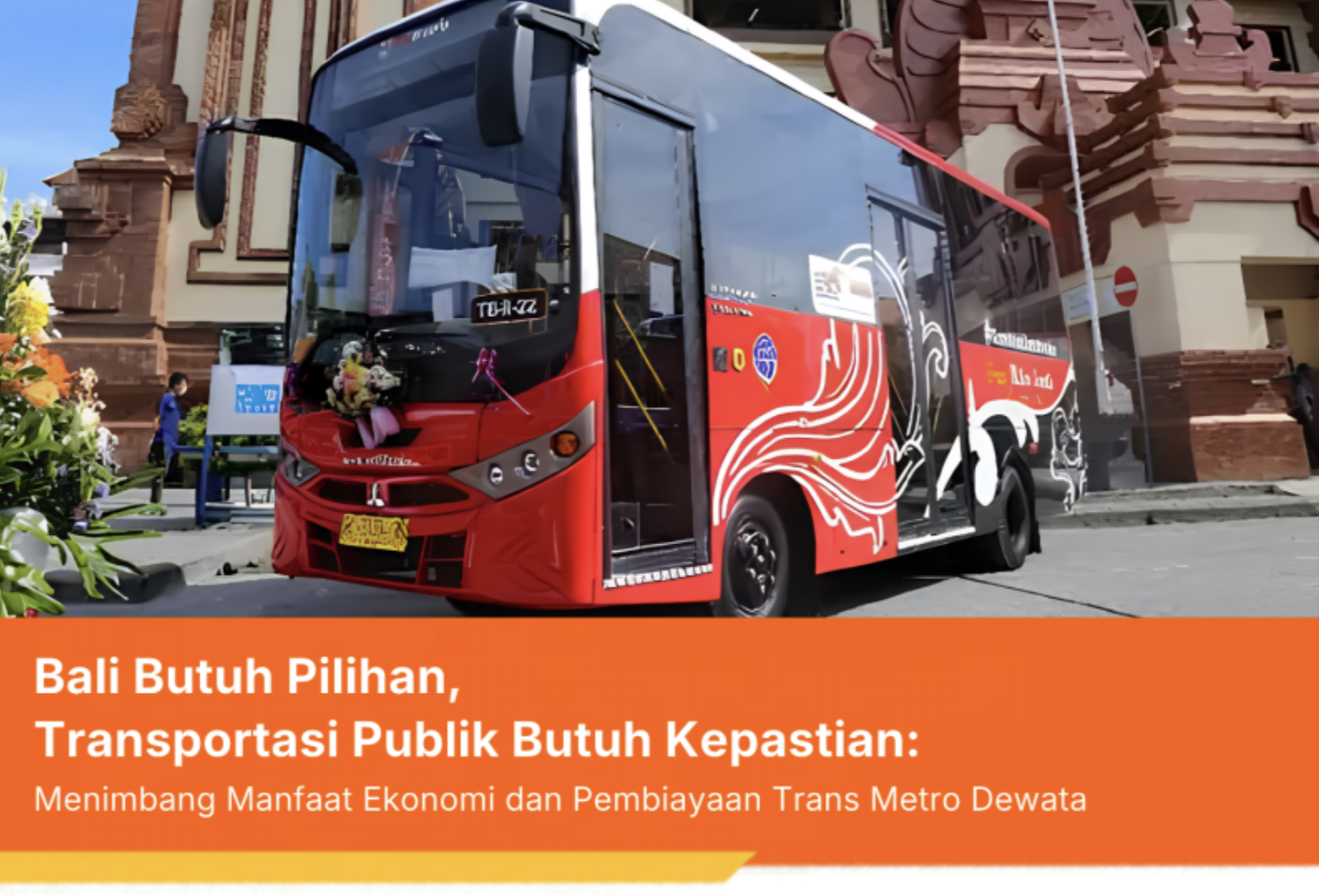
Trans Metro Dewata (TMD) began operating in 2020 under the Buy The Service (BTS) scheme, with funding provided by the central government through the Teman Bus program. Following the program's conclusion in 2024, funding responsibilities were transferred to the Bali Provincial Government, which was not adequately prepared in terms of budget allocation. This situation led to a four-month suspension of operations in early 2025, before services resumed on April 20, 2025. This experience highlights the importance of funding certainty and regional fiscal readiness in maintaining the continuity of public transportation services. This study evaluates the economic benefits of TMD by estimating its regional economic linkages and conducting a social cost-benefit analysis. These analyses aim to assess the service's contribution to the economy and public welfare in comparison with the public resources allocated. The study employs the Input-Output (IO) analysis method and the Benefit-Cost Ratio (BCR) calculation to examine the multiplier effects of realized subsidy expenditures and estimate the benefit ratio of TMD services. The findings indicate that TMD's realized budget expenditure of IDR 73.98 billion during the period from April 2025 to June 2026 generated an economic output of IDR 127.31 billion in Bali, equivalent to a Type II multiplier of 1.72. Furthermore, TMD generated user benefits estimated at approximately IDR 22.95 billion. Therefore, this study supports the continuation of TMD services while emphasizing the importance of ensuring that public expenditure generates benefits commensurate with the resources utilized.
Read the Full Issue Brief: See Details

UDAYANA UNIVERSITY